John Lewis, Amelia Boynton, and Lynda Blackmon Lowery, March 7, 1965
While the following incident is not directly related to Jim Crow in transportation, the underlying issue is the same, and the event itself is of central importance to the history of protest in the 20th century. And remembering is an important prelude to action.
During early 1965, a voter registration campaign was under way in Selma, Alabama. On the afternoon of March 7, 1965, as they began what was to be a fifty-four-mile march for voting rights from Selma to Montgomery, John Lewis and Hosea Williams, a noted SCLC leader, led a column of more than two hundred people over the Edmund Pettus Bridge in Selma. On the other side of the bridge, just across the city line, they came face to face with a blue wall of state troopers, some on foot, some on horseback, some with tear gas. After a brief standoff and an order for the marchers to disperse, the troopers attacked. Lewis was the first to be hit. He fell to the ground with a fractured skull. When he tried to get up he was hit again. “I’m going to die here,” he thought. Lewis and sixteen other marchers were hospitalized. Amelia Boynton, a long-time activist, was knocked unconscious and left lying in the street. Lynda Blackmon Lowery, two weeks shy of her fifteenth birthday, was struck on the head so severely she required thirty-five stitches.
The date has come to be known as Bloody Sunday.
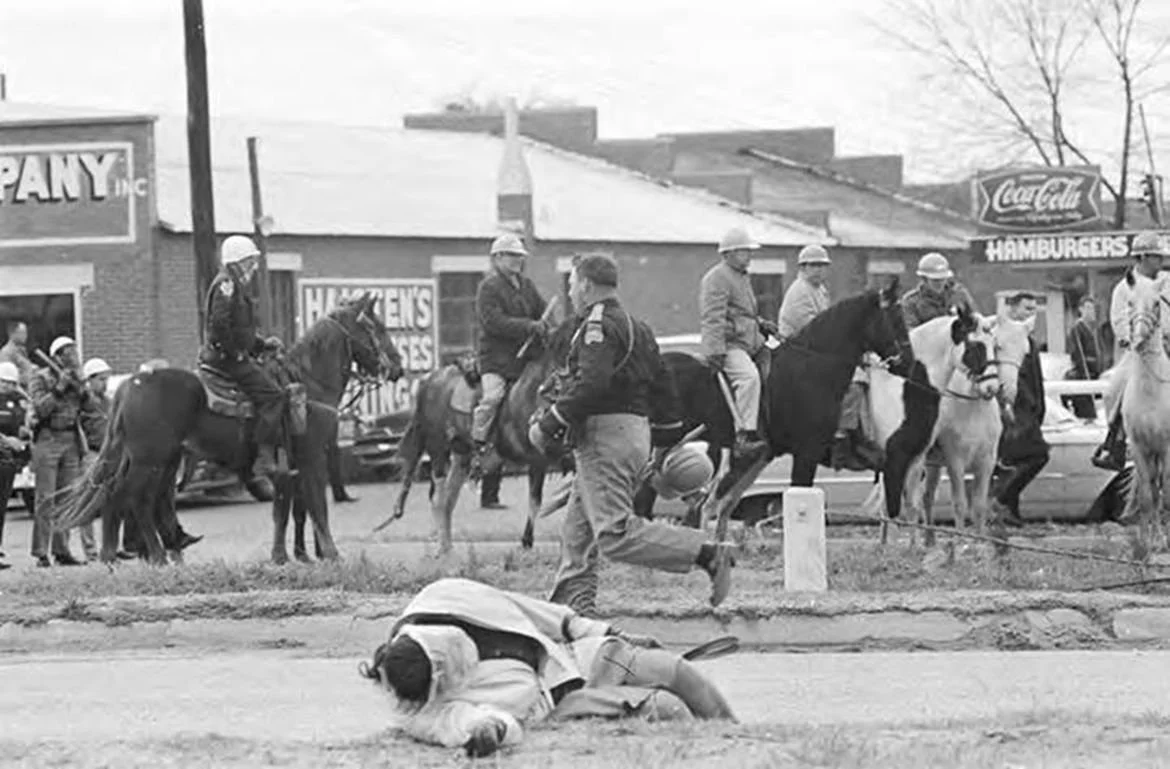
Amelia Boynton, lying unconscious (Copyright: Alabama Department of Archives and History)