“Many people don’t know the whole truth. . . .
I was just one of many who fought for freedom.”
Rosa Parks

Protesting with Rosa Parks
tells the experiences of more than ninety-five Black travelers who refused to give up their rights on stagecoaches, steamboats, omnibuses, streetcars, ferries, buses, trains, planes, cars, even elevators and a shoe shine stand, for almost two hundred years.
Published by
NewSouth Books
University of Georgia Press
ISBN: 9781588385529
Paperback 423 pages
45 b&w images
2 maps
6 in. x 9 in.
Now available as an audiobook
narrated by Tiana Holley
on Audible, Everand, Libro.fm, Hoopla, Spotify, and Audiobooks Inc..
“Protesting with Rosa Parks should be required reading at the collegiate level. Every courtroom also should have a copy of the book. I commend Bollard profusely for writing a comprehensive study that provides a foundation for a course on civil rights and a better understanding of race relations in the United States.”
—Richard Bailey, Alabama Historical Association (USA)
Journal of African American History, Vol. 111, No. 3, September 2026
Scroll down for a review from
The Journal of Southern History, August 2026
Interviews:
“Talk the Talk” interview with Bill Newman,
WHMP Radio, Northampton, Mass., Feb. 2, 2026
Listen Here
”In These Times” Interview with Bill Nigut,
WABE Public Radio, Atlanta, Georgia
Listen here
“Book Notes” interview with Vick Mickunas,
WYSO Public Radio, Yellow Springs, Ohio
Listen here
“Talk the Talk” interview with Buz Eisenberg,
WHMP Radio, Northampton, Mass., Sept. 11, 2025
Listen here
Upcoming Events
Saturday, November 14, 2026
4:00-5:30
Protesting Jim Crow
Four Early Northampton Activists
Who Led the Way
An illustrated talk about four civil rights pioneers who lived in Northampton/Florence
Coolidge Presidential Library,
Forbes Library
Northampton, MA
Supported by Forbes Library and Historic Northampton
_________
Past Events
Wednesday, Sept. 17, 6:30-8:00
David Ruggles Center
at the Bombyx Center, Florence
Tuesday, Sept. 23, 6:00pm
TidePool Bookshop, Worcester, Mass.
Saturday, Oct. 25, 1:00-2:30pm
Friends of Leverett Library, Leverett, Mass.
Saturday, Nov. 15, 1:00-3:00pm
Olive Tree Books-n-Voices
Springfield, Mass.
Friday, Nov. 21, 12:00-1:30pm
Amherst History Society
”History Bites” Lecture Series:
Amherst, Mass.
Tuesday, January 20, 5:30-7:00pm
The NewSouth Bookstore
Freedom Rides Museum
Montgomery, Ala.,
Tuesday, Feb. 3, 2:00-4:00pm
Allen Meeting Room, John W. Olver Transit Center
Greenfield, Mass.
Saturday, Feb. 7, 10:30-11:30am
Applewood Retirement Community
1 Spencer Drive, Amherst, Mass.
Tuesday, Feb. 24, 2:00-3:00pm
Hadley Senior Center
46 Middle St., Hadley, Mass.
_________
The Protestors
The following is a roughly chronological list of the people whose protests against racial discrimination on stagecoaches, trains, streetcars, buses, airplanes, cars, and even elevators are recounted in Protesting with Rosa Parks. The names of several are not known. Names in boldface indicate persons who were killed as a result of their protest.
Emiliano Mundrucu * David Ruggles * [Unknown] * Thomas Van Renselaer * Nathaniel A. Borden * Thomas Downing * Thomas Jinnings * [Unknown] * Frederick Douglass * Mary Newhall Green * [Unknown] * Thomas James * Shadrach Howard * Charles Lenox Remond * Jabez P. Campbell * William Saunders * Basil Dorsey * Sarah Parker Remond * J W. C. Pennington * Elizabeth Jennings * William Wells Brown * William Howard Day * Peter S. Porter * William Still * Hannibal Carter * Miles and Emma Robinson * Sojourner Truth * Mrs. Derry * [Unknown] * Harriet Tubman * George Moses Horton * Octavius Catto * Charlotte Brown * William Brown * Emma Jane Turner * Mary Ellen Pleasant * Caroline LeCount * William Nichols * Josephine Decuir * Sallie J. Robinson * Jane Brown * Ida B. Wells-Barnett * Martha, Mary, Lucy, and Winnie Stewart * Lola Houck * William H. Councill * William H. Heard * Homer Plessy * Alice A. Bowie * Georgia Edwards * Mary Church Terrell * Charlotte Hawkins Brown * Benjamin J. Davis * Samuel Wilbert Tucker * “Bigger Thomas #5” * Arthur Wergs Mitchell * Pauli Murray * Elmer W. Henderson * Bayard Rustin * Hugh M. Gloster * Charles J. Reco * Henry Williams * Nora Green * EdwardGreen * Dovey Johnson Roundtree * Jackie Robinson * Booker T. Spicely * Irene Morgan * Viola White * Langston Hughes * Sarah Elizabeth Ray * Isaac Woodard * Conrad Lynn * George Houser * Andrew Johnson * Joseph Felmet * Igal Roodenko * Jim Peck * Dennis Banks * Nathan Wright * Wally Nelson * William Worthy * Homer Jack * Worth Randle * Ernest Bromley * Jo Ann Robinson * Thomas Edward Brooks * Sarah Louise Keys * Martha White * T. J. Jemison * Claudette Colvin * Aurelia Browder * Mary Louise Smith * Susie McDonald * Rosa Parks * Wilhelmina Jakes * Carrie Patterson * Bruce Boynton * Richard Burdine * Henry Nichols * John Lewis * Bernard LaFayette * Joe Perkins * Al Bigelow * Genevieve Hughes * Ed Blankenheim * Charles Person * Herman Harris * Walter Bergman * Ike Reynolds * Paul Brooks * Salynn McCollum * Jim Zwerg * Lucretia Collins * Susan Wilbur * Sandra Bland * Philando Castile * Tyre Nichol
Praise for
Protesting with Rosa Parks
“The fight for justice didn’t start or end with one person, but by the blood shed by countless individuals. I was a 15-year-old girl when I refused to give up my seat, but I knew it was my constitutional right and I wasn’t breaking any laws except the unwritten Jim Crow law of segregation. This history is about more than a bus seat; it’s about standing up against a racist system that had oppressed colored people for generations. Protesting with Rosa Parks reminds us of how far we’ve come and still have to go.”
Claudette Colvin
Civil rights pioneer arrested on Montgomery bus ten months before Rosa Parks
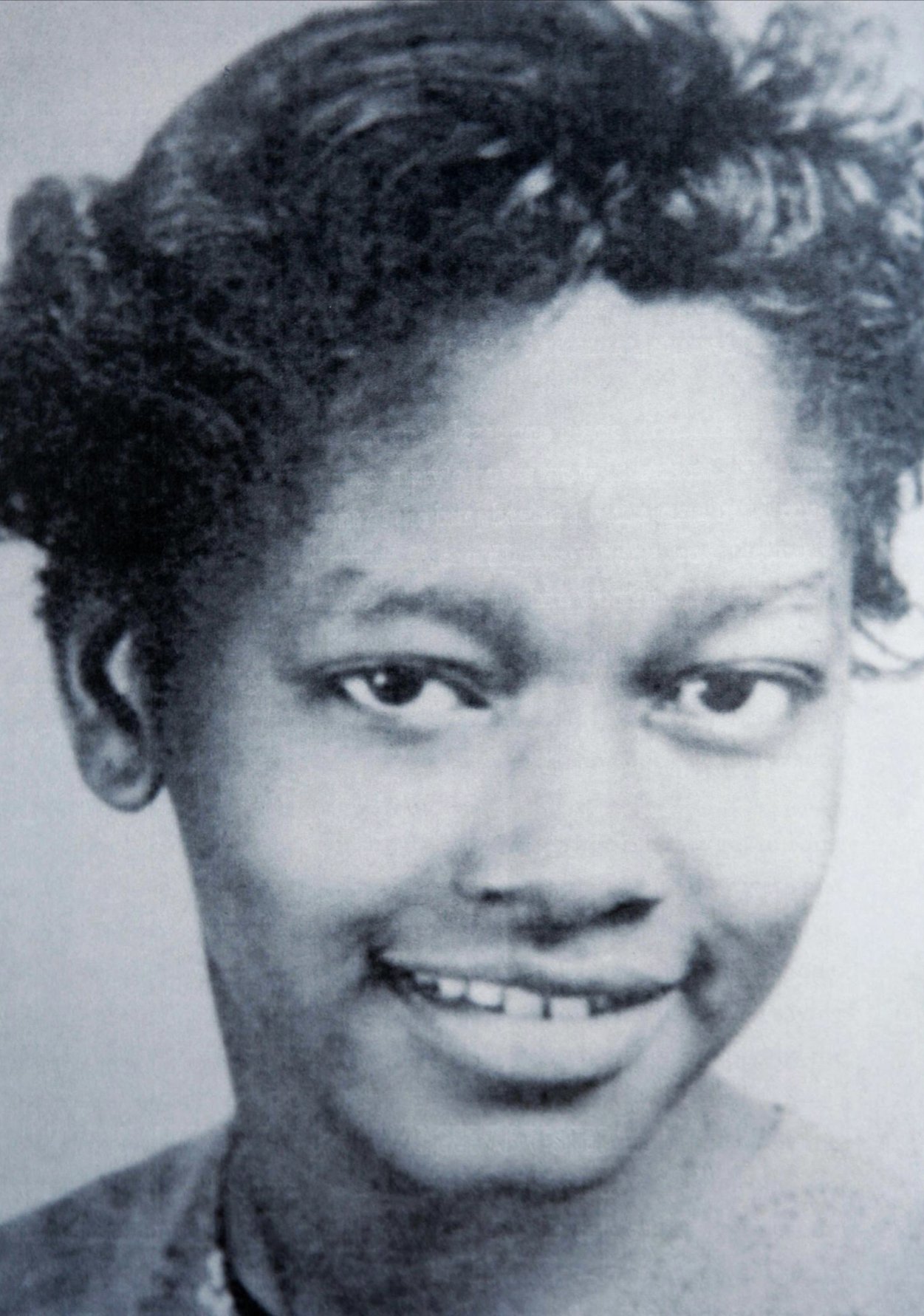
Claudette Colvin, c. 1953
While Rosa Parks has been venerated for her instrumental role in the Civil Rights Movement, John K. Bollard’s Protesting with Rosa Parks shows her courageous actions have deep roots in the Black protest tradition. Having unearthed lesser-known stories of resistance to segregated public conveyances, Bollard’s book demonstrates the centrality of such efforts within broader movements to end slavery, Jim Crow, and racist policing practices. Indeed, this engaging, well-written book provides an original contribution to the history of the Black protest tradition - from the Early Republic to our present day.
Ousmane Power-Greene
E. Franklin Frazier Professor of History, Clark University

Rosa Parks, Dec. 5, 1955
Protesting with Rosa Parks: From Stagecoaches to Driving While Black is deeply informed by the lives, and at times the deaths, of nearly a hundred African Americans as they traveled the country. This book is a model of how biography can bring social history to life across a span of almost two hundred years. Of special note is David Ruggles, in effect the first “freedom rider,” a significant thinker and strategist whose willingness to put his body on the line repeatedly in the name of freedom was truly revolutionary. When we see someone today protesting inequality, at risk of being vilified, beaten, and arrested, we are witnessing the legacy of David Ruggles and the others in this outstanding book.
Steven J. Niven
Executive Editor, Hutchins Center for African & African American Research, Harvard University

David Ruggles, 1838
A review from The Journal of Southern History, Volume XCII, No. 3, August 2026
Protesting with Rosa Parks: From Stagecoaches to Driving While Black.
By John K. Bollard. (Athens, Ga.: NewSouth Books, 2025. Pp. xx, 403. Paper, $34.95, ISBN 978-1-58838-552-9.)
In this sweeping history of Black resistance to transportation discrimination, John K. Bollard identifies mobility as a central battleground of the civil rights movement. Bollard constructs a long historical arc in which African Americans across the country challenged segregated streetcars, interstate buses, and city transit systems. In doing so, they forced courts, companies, and cities to renegotiate the terms of equal movement. By blending legal, social, and municipal histories, Bollard demonstrates how battles over who could ride, where they could sit, and at what costs were fundamental to the long Black freedom movement from the nineteenth to twenty-first centuries.
Protesting with Rosa Parks: From Stagecoaches to Driving While Black is expansive. This work highlights the contributions of nearly a hundred activists across the United States. As the title suggests, Bollard contextualizes Rosa Parks’s infamous refusal to relinquish her seat on a Montgomery, Alabama, bus in 1955 as just one moment in a two-hundred-year struggle for equal access to transportation. There are other familiar names in this struggle, such as Frederick Douglass, Homer Plessy, Ida B. Wells-Barnett, and Pauli Murray, but Bollard’s greatest contribution is in highlighting lesser-known activists. For example, Mary Newhall Green wrote letters of protest to the directors of the Eastern Railroad in 1841 after she was physically assaulted for refusing to sit in the segregated train car to Boston. Another example is Private Henry Williams, a World War II veteran, who was murdered by a bus driver in Mobile, Alabama, after an argument. Bollard also includes Rosa Parks’s contemporaries, such as Claudette Colvin, who, at age fifteen, also refused to give up her bus seat to a white rider in Montgomery. Bollard examines the role that respectability politics played in the choice that civil rights lawyers ultimately made in abandoning Colvin’s case as the launch for the citywide boycott. Nevertheless, he situates her activism as an important moment in the narrative.
Bollard frames the “refusal to relinquish one’s seat and one’s dignity” as the most persistent arena of racial conflict and protest in the Black freedom movement (p. xvi). While the vignettes get repetitive, Bollard argues that part of the point is to “understand the nature” of resistance to “actual, continual, predictable, culturally sustained oppression” (p. xvii). The repetition underscores how acts of defiance from ordinary people were not isolated incidents but a constant struggle across generations of African Americans. In highlighting the similarities of activism across time and space, Bollard transforms acts that might be considered mundane into a collective narrative. He emphasizes how the fight for dignity in public transportation was waged not only in the landmark legal cases that have ended up in school textbooks but also in the countless and everyday confrontations that defined—and define—Black movement in the United States.
Because Bollard’s book is so expansive, he sacrifices depth for breadth and leaves the reader wanting more from some of the stories. Even this trade-off, though, serves Bollard’s larger purpose of emphasizing the ubiquity of Black protest in transportation across the United States across generations. Bollard’s choice of vignettes invites additional scholarship in this realm of civil rights history.
Bollard favors compelling narrative over analytical or theoretical framing. His strength in storytelling through empathetic and clear prose resists situating the individual stories in historiographical or theoretical context. Still, this historical approach seems deliberate to Bollard’s purpose of emphasizing the “weight of that history as it has been and continues to be borne by African Americans” (p. xvii).
Protesting with Rosa Parks offers an effective survey of Black resistance to segregation and racism in public transportation. By placing the iconic Rosa Parks in a long continuum of activism and centering the everyday struggles of ordinary travelers, Bollard reveals the persistent effort it takes for Black Americans to simply get from Point A to Point B.
Washington State University Heather McNamee
Copyright © 2026 The Southern Historical Association
You may be interested in visiting these sites:
David Ruggles Center for History and Education
Claudette Colvin Foundation
Pauli Murray Center for History and Social Justice
Speaking Truth to Power: The Life of Bayard Rustin